




When Metal Roofing Makes Sense
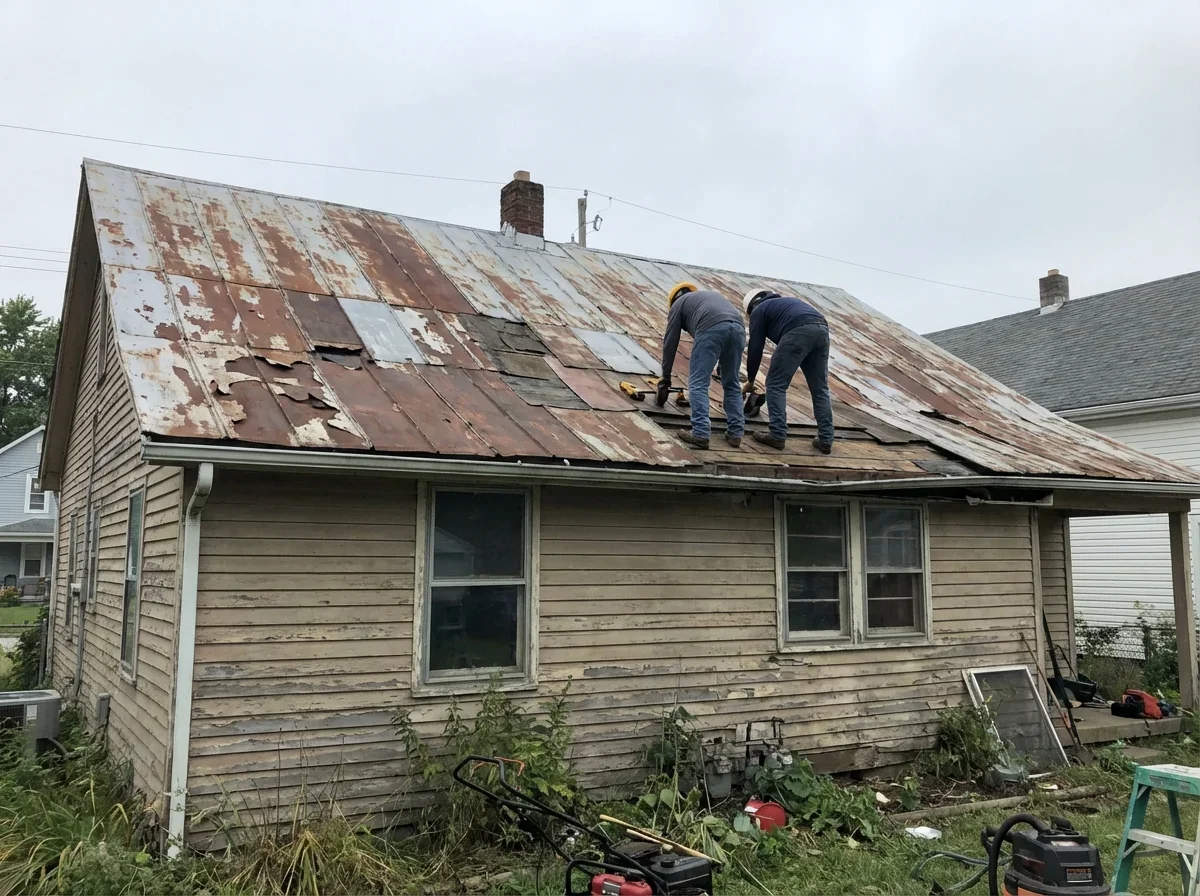
You're replacing a roof that failed early. Or you're tired of doing it every 15 years. Maybe you own a barn or agricultural building where longevity matters more than initial cost.
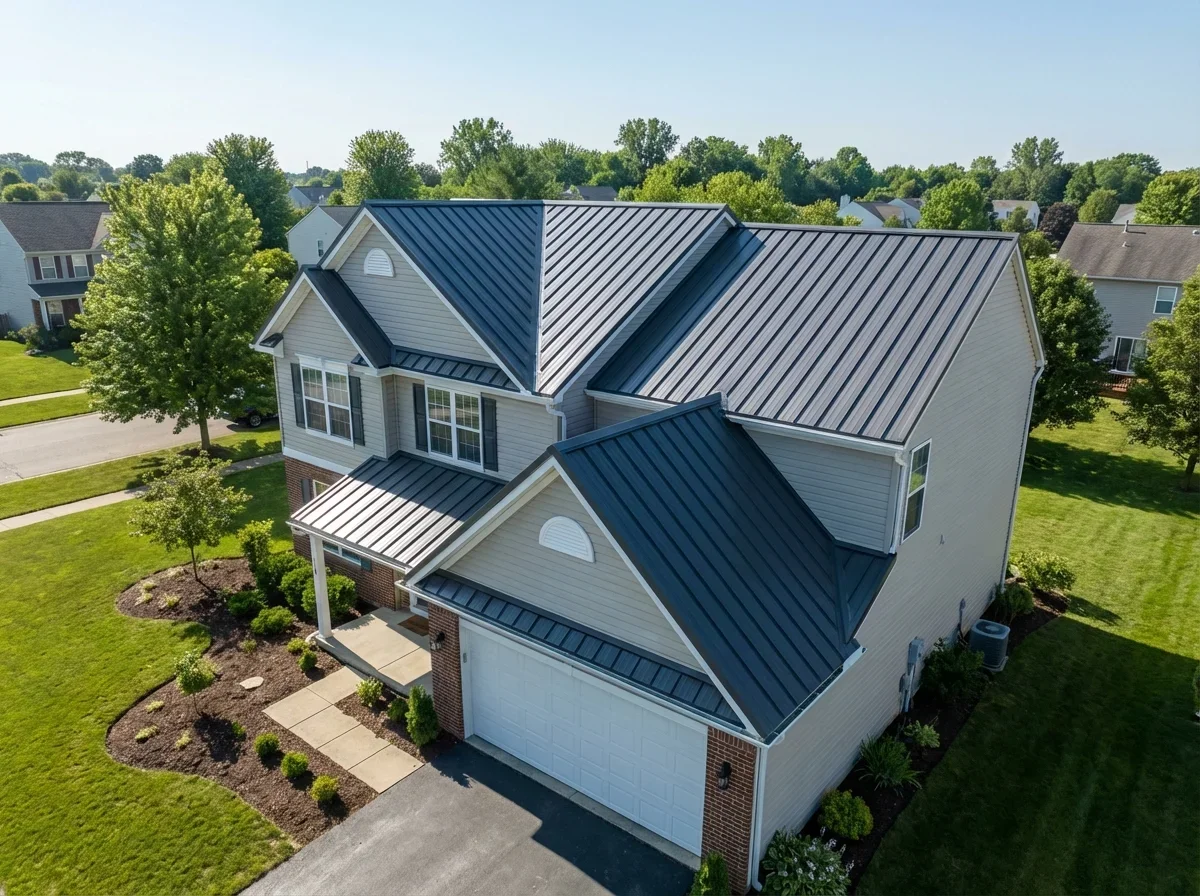
Metal roofing solves specific problems — ice dams from Lake Erie snow, wind damage in open farmland, heat buildup in unconditioned structures, and the cycle of replacing asphalt shingles every generation.
Ohio's freeze-thaw cycles destroy asphalt. Water seeps under damaged shingles, freezes, expands, and lifts more material. Metal sheds snow and ice cleanly. No granule loss. No curling edges.
For barns and agricultural buildings, metal roofing prevents the $12,000-18,000 replacement cycle. One installation covers 50+ years. Residential applications in Columbus and Cleveland see insurance premium reductions of 5-15% due to superior wind and fire ratings.
One roof, one lifetime. A properly installed metal roof in Ohio will outlast two or three asphalt replacements and still have 20+ years of service life remaining.
Timing matters. Spring and fall offer the most predictable weather windows. Summer heat makes panel handling easier but increases expansion considerations. Winter installations require specialized techniques for fastener sealing.
What Does Metal Roofing Cost in Ohio?
Metal roofing costs 2-3 times more than asphalt shingles initially. The calculation changes when you factor in 40-70 year lifespan vs 15-20 years and reduced maintenance.
| System Type | Installed Cost per Sqft | Typical 2,000 Sqft Home |
|---|---|---|
| Standing Seam Steel | $11-16 | $22,000-32,000 |
| Standing Seam Aluminum | $13-18 | $26,000-36,000 |
| Corrugated Steel (R-Panel) | $6-9 | $12,000-18,000 |
| Corrugated Galvalume | $7-11 | $14,000-22,000 |
Standing Seam vs Corrugated Pricing
Standing seam costs more because of concealed fastener systems and specialized installation. You're paying for 50-70 year performance and minimal maintenance. Popular for homes in Columbus, Toledo, and suburban markets where aesthetics matter.
Corrugated and R-panel systems suit agricultural buildings, workshops, and utility structures. Exposed fasteners reduce installation labor but require periodic inspection — neoprene washers degrade in 15-20 years even when panels remain sound.
Cost Factors Beyond Materials
Roof complexity adds 20-40% to base pricing. Multiple valleys, dormers, skylights, and steep pitches (8:12 or steeper) increase labor hours. Tear-off and disposal of existing asphalt roofing adds $1.50-3.00 per square foot.
Snow load capacity affects material gauge. Northern Ohio near Lake Erie requires heavier gauge panels (24-gauge steel minimum) to handle 30-40 psf snow loads. Southern regions use 26-29 gauge for cost savings.
Energy-efficient coatings (cool roof technology) add $0.75-1.50 per square foot but reduce cooling costs 10-15% in summer months. Many Akron and Canton homeowners recover this premium through lower utility bills within 7-10 years.
Insurance companies recognize metal roofing's wind and fire resistance. Expect premium reductions of 5-15% depending on your carrier and location. Impact-resistant ratings provide additional discounts in hail-prone areas.
The Metal Roof Installation Process
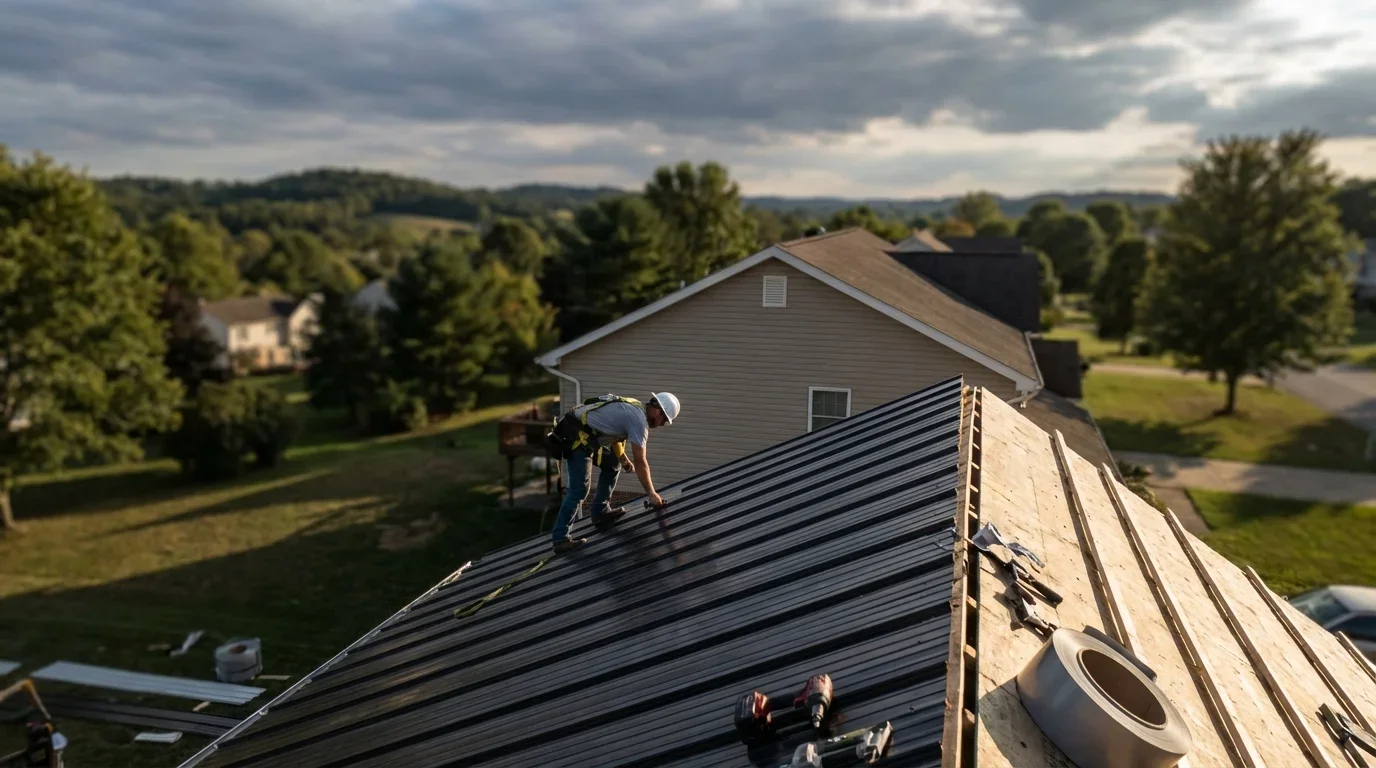
Metal roofing installation requires precision. Panels expand and contract with temperature shifts — fastening systems must accommodate movement while maintaining weather-tight seals.
The process differs significantly between standing seam and exposed-fastener systems. Standing seam uses concealed clips that allow thermal movement. Corrugated and R-panel systems use exposed screws with neoprene washers that seal against weather but require eventual maintenance.
Roof Deck Preparation and Underlayment
- Inspection and repair — Decking must be solid. Rotten plywood or OSB gets replaced before any panels go up.
- Underlayment installation — Synthetic underlayment (not felt paper) provides secondary water barrier. Critical in Ohio's snow belt regions near Cleveland and along Lake Erie.
- Drip edge and starter trim — Metal trim establishes straight lines and prevents wind-driven rain from reaching the deck edge.
Panel Installation and Fastening
Standing seam panels interlock along vertical ribs. Concealed clips attach to the deck, then the next panel snaps over the seam. A mechanical seamer crimps the connection — no exposed fasteners to leak.
Corrugated systems fasten directly through the panel crown into purlins or deck. Every fastener penetrates the weather surface. Proper spacing (12-18 inches) and torque control prevent panel distortion and washer compression failure.
Flashing, Ridge Caps, and Finishing
Valley metal channels water flow. Step flashing integrates with chimneys and sidewalls. Ridge caps ventilate attic spaces while blocking weather. Each joint gets sealant backing — screws alone don't stop water.
Most residential installations in Cincinnati and Dayton complete in 3-5 days depending on roof complexity. Barns and agricultural buildings take 5-10 days for larger square footage. Noise during installation is significant — panels amplify impact sounds.
How to Choose a Metal Roofing Contractor in Ohio
Metal roofing installation requires different skills than asphalt shingle work. The contractor who replaced your neighbor's asphalt roof may lack metal roofing experience — and it shows in leaky seams and panel buckling.
Questions to Ask
- What percentage of your work is metal roofing? (Look for 40%+ focus, not occasional side work)
- Are you certified by the panel manufacturer? (Certifications from MBCI, McElroy, or Berridge indicate proper training)
- Can I see examples of completed standing seam installations? (Portfolio should show trim detail and flashing work)
- What underlayment and fastener systems do you use? (Synthetic underlayment and stainless fasteners are non-negotiable)
- How do you handle thermal expansion? (Proper clip spacing and panel movement allowance prevent buckling)
- What's included in your warranty? (Material warranties are separate from workmanship — you want both)
Red Flags
- Quotes significantly below market range (cutting corners on fasteners or underlayment)
- Pressure to use exposed-fastener systems on residential applications without cost discussion
- No manufacturer certification or training documentation
- Cannot provide local references from the past 2-3 years
- Requires full payment upfront (standard is deposit + progress payments)
Ohio requires roofing contractors to carry general liability and workers' compensation insurance. Ask for certificates. Unlicensed contractors create liability when workers get injured on your property.
Compare at least three contractors through detailed quotes showing material specifications, labor breakdown, and warranty terms. The directory listings here let you filter by metal roofing specialization and customer ratings from homeowners in Youngstown, Parma, and throughout Ohio.
Frequently Asked Questions
Tile roof installation costs typically range from $7 to $27.50 per square foot, depending on tile material quality and roof complexity. For a 2,000-square-foot roof, the total cost will be:
| Cost Range | Price |
|---|---|
| Budget (basic clay, simple roof) | $14,000 |
| Mid-range (quality clay or concrete tile) | $26,900 |
| Premium (specialty tile, complex design) | $55,000 |
Most homeowners spend approximately $26,900 for a standard tile roof. Costs increase with roof pitch, valleys, dormers, slate-look finishes, and labor complexity. Obtain 3+ quotes from Ohio contractors, as local material availability and labor rates vary by region.
Watch for red flags such as: vague or incomplete written estimates, pressure to pay in cash or upfront, reluctance to show credentials (license, insurance, references), dismissal of a second opinion, exaggeration of damage severity, promises of unrealistic timelines or warranties, and lack of a clear contract. Verify licensing through the Ohio Construction Industry Licensing Board, check online reviews, ask for multiple quotes, and request proof of liability and workers' compensation insurance. A trustworthy contractor will welcome questions and provide transparent, detailed documentation.
The cheapest time to replace your roof is typically late fall through early winter (October–December). During these months, roofing contractors experience lower demand, allowing them to offer competitive pricing on both labor and materials. Winter weather in Ohio can present scheduling challenges, but contractors often provide discounts to keep crews working. Spring and summer are peak seasons with higher costs and longer wait times. If you can schedule during the off-season and weather permits, you'll save 10–15% on average compared to peak months.
Noise during rain and hail is the most commonly cited complaint, though modern metal roofs with proper underlayment, insulation, and attic ventilation significantly reduce this issue. Other challenges include higher upfront cost, potential for oil canning (visible waviness in panels), thermal expansion/contraction requiring specialized installation, and the need for experienced contractors—not all roofers are trained in metal roof installation. In Ohio's harsh weather, improper fastening or ventilation can lead to premature failure.
Skylight unit costs vary significantly by size and features. A basic flat frameless skylight starts around $165–$225 for a small 500×500mm unit, while larger or upgraded models with features like privacy glazing or triple glazing can reach $800+ for premium sizes (1000×2500mm). However, these are material-only costs and do not include professional installation labor, which is typically a separate expense of $400–$3,725 depending on roof complexity and skylight type.
GRACE Ice & Water Shield® is a premium self-adhered roofing underlayment membrane designed to prevent ice dam leaks and weather penetration. It is composed of an aggressive rubberized asphalt adhesive backing bonded to a slip-resistant, high-density polyethylene film. This product is commonly installed under shingles along eaves, valleys, and ridges—especially important in Ohio where ice dams and winter moisture damage are frequent problems.
No, metal roofs typically cost more upfront than asphalt shingles, but offer better long-term value. Asphalt shingles generally cost $3–$6 per square foot installed, while metal roofing ranges from $7–$12 per square foot. However, metal roofs last 40–70 years versus 15–25 years for shingles, require less maintenance, and often qualify for insurance discounts or energy tax credits in Ohio, making them more cost-effective over time.
The 25% Rule is a practical guideline used by homeowners and contractors to decide between repair and replacement. If more than 25% of your roof's surface area requires repairs, a full roof replacement is often more cost-effective and practical than multiple patchwork repairs. This threshold accounts for labor efficiency, material consistency, warranty protection, and long-term value.
Related Articles
Metal Roofing Cost vs Asphalt Shingles: Ohio Price Comparison
Compare metal roofing and asphalt shingle costs in Ohio. See installed prices, lifespan, maintenance costs, and which material delivers better long-term value.
Read Cost GuideSigns You Need a New Roof: 10 Warning Signs
Spot the 10 warning signs that your roof needs replacement. From curling shingles to sagging decking, learn what to look for before small issues become big problems.
Read ProblemNeed Help With Your Project?
Join 500+ homeowners we've helped