




When Do You Need Emergency Roof Repair?
Not every roof issue requires a middle-of-the-night call, but some situations escalate fast. If water is actively entering your home, you're in emergency territory. Every hour of exposure means more ceiling damage, insulation saturation, and potential mold growth.
Active Leak Situations
You need emergency service when you see:
- Water stains spreading on ceilings or running down walls
- Dripping or pooling water in the attic space
- Visible daylight through the roof deck from inside
- Wet insulation or waterlogged drywall
A slow drip can wait until morning. Active water flow cannot.
Storm Damage Assessment
Ohio's wind season runs March through June, with severe storms capable of tearing off shingles across entire roof sections. After high winds hit Columbus, Cleveland, or Cincinnati, look for:
- Shingles scattered in your yard or on neighboring properties
- Exposed underlayment or roof decking visible from the ground
- Lifted or creased shingles that haven't fully detached yet
- Dented or punctured metal flashing around chimneys and vents
Spring hailstorms create a different problem — surface damage that may not leak immediately but compromises the roof's weather resistance. Check downspouts for shingle granules after hail events.
Structural Concerns
Call immediately if you notice:
- Sagging roofline or dipped areas between rafters
- Cracked or split roof decking visible from the attic
- Interior walls showing stress cracks after a storm
Structural damage doesn't improve on its own. A compromised roof deck can collapse under snow load during Ohio's winter months.
Ohio's freeze-thaw cycle accelerates damage. A small leak in October becomes an ice dam disaster by January, with water backing up under shingles and saturating wall cavities.[2]
What Does Emergency Roof Repair Cost in Ohio?
Emergency services cost more than scheduled work because you're paying for immediate availability, after-hours labor, and rush mobilization. Here's what to expect.
Emergency Call-Out and Tarping Fees
| Service | Typical Cost Range |
|---|---|
| Emergency assessment and call-out | $150 - $350 |
| Tarping (small area, under 200 sq ft) | $300 - $600 |
| Tarping (medium area, 200-500 sq ft) | $600 - $1,200 |
| Tarping (large section, 500+ sq ft) | $1,200 - $2,500 |
These prices reflect current rates in Columbus, Toledo, and Dayton metro areas. Night and weekend calls may add 20-30% to base rates.
Tarping costs increase with:
- Roof pitch — steeper roofs require more safety equipment and time
- Height — two-story or three-story buildings need specialized equipment
- Access — tight spaces, landscaping obstacles, or limited street access
- Weather conditions — working during active storms costs more
Temporary vs Permanent Repair Costs
| Repair Type | Cost Range | Longevity |
|---|---|---|
| Emergency patching (small leak) | $500 - $1,200 | 30-90 days |
| Temporary shingle replacement | $800 - $2,000 | 90 days - 6 months |
| Structural stabilization | $1,500 - $5,000 | Until permanent repair |
| Permanent section repair | $2,500 - $8,000 | 15-25 years |
Emergency repairs are Band-Aids, not solutions. The goal is stopping water intrusion immediately while you arrange permanent repairs. Budget for both.
Most insurance policies cover the full cost of both emergency tarping and permanent repairs when storm damage is the cause. Your deductible applies once, not separately for emergency and permanent work.
What's Not Included
Emergency pricing typically covers only immediate weatherproofing. Separate costs:
- Permit fees for permanent repairs ($50-$150 in most Ohio jurisdictions)
- Interior water damage repairs (ceiling, insulation, drywall)
- Mold remediation if water sat for more than 48 hours
- Permanent material upgrades beyond original roof specifications
Get the temporary/permanent cost breakdown in writing before work begins.
The Emergency Roof Repair Process
When you call an emergency roofing contractor, here's what happens in the first few hours.
Initial Response and Assessment
Most established Ohio contractors arrive within 2-4 hours for true emergencies. The initial assessment takes 20-40 minutes:
- Exterior inspection from the ground and ladder to identify obvious damage
- Interior inspection to trace leak sources and assess water intrusion extent
- Attic examination to check for structural issues and ventilation problems
- Immediate hazard identification — loose materials, compromised decking, electrical risks
The contractor photographs everything. You'll need this documentation for insurance claims.[1]
Temporary Weatherproofing
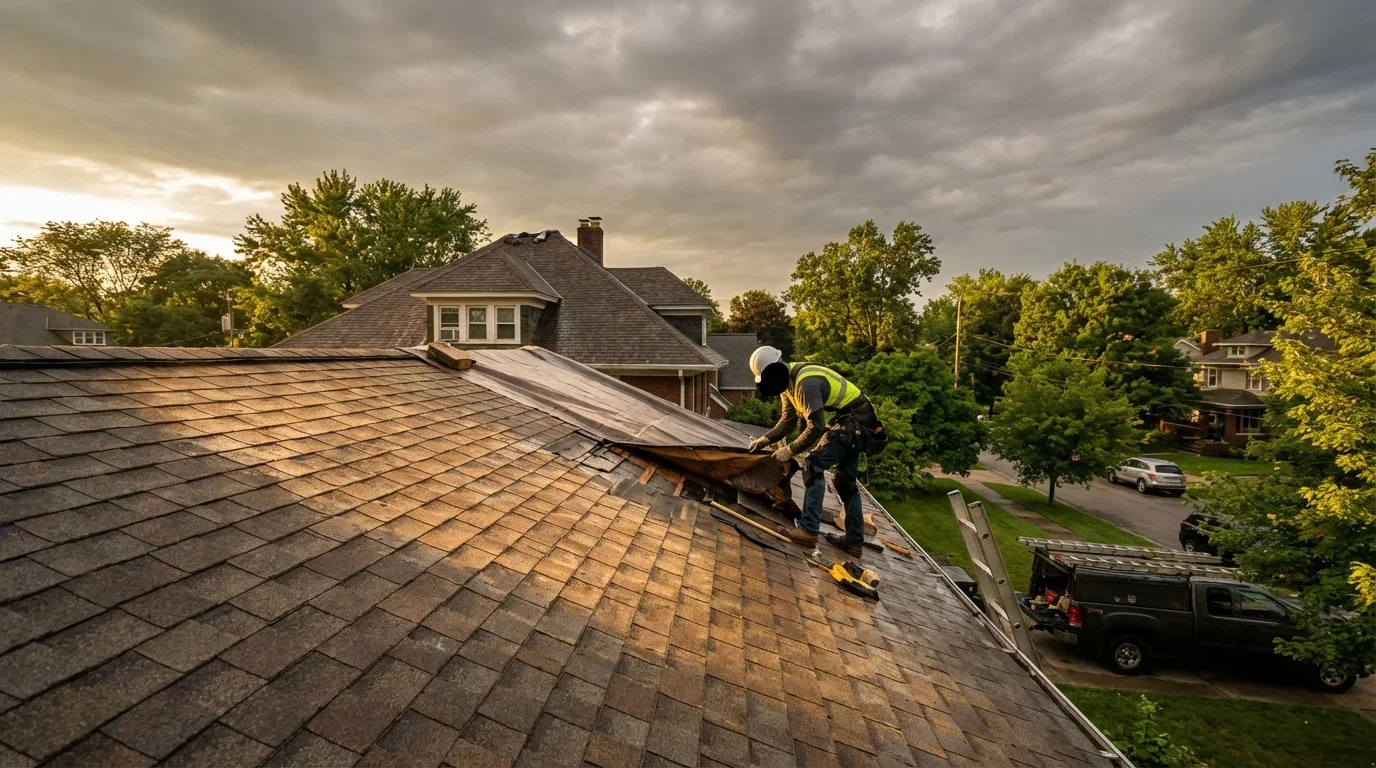
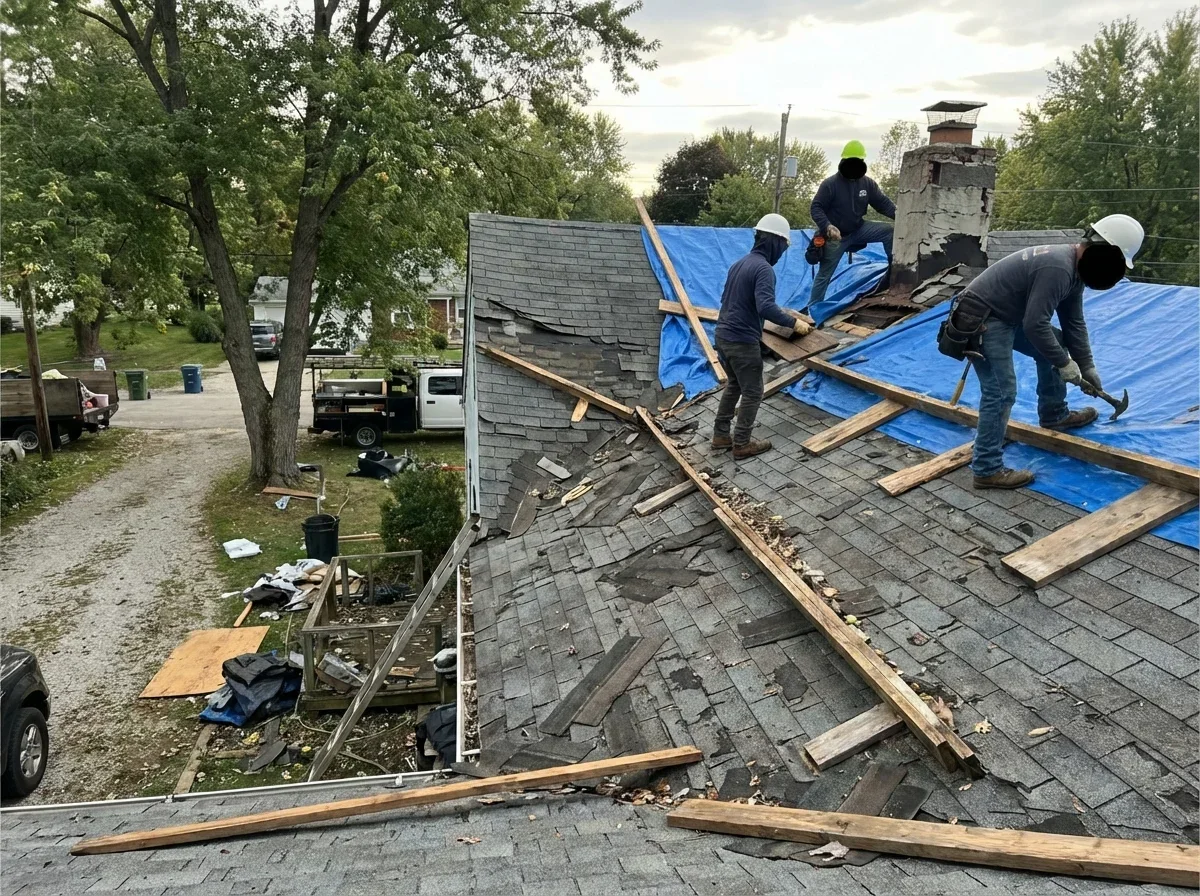
Emergency tarping stops the water but isn't a repair. The process:
- Debris removal — clear damaged shingles, branches, and loose materials
- Board-and-batten installation — wooden battens anchor the tarp to prevent wind uplift
- Tarp positioning — extends at least 4 feet beyond the damaged area
- Securing — screws with rubber washers through battens into solid decking
Standard blue poly tarps provide weather protection for up to 90 days.[2] After that, UV degradation and wind stress require replacement or permanent repair.
In Akron or Canton, where heavy snow is common, contractors may recommend reinforced tarping with additional support battens to handle winter snow loads.
Damage Documentation for Insurance
Emergency contractors should:
- Take time-stamped photos before touching anything
- Measure damaged areas precisely
- Collect samples of damaged materials (shingles, flashing)
- Note weather conditions and suspected cause
- Provide you with copies immediately
Get this documentation before they start tarping. Insurance adjusters need to see the original damage, not just the aftermath of temporary repairs.
Most Ohio homeowner policies cover emergency measures to prevent further damage, but you'll need proof the emergency was weather-related, not deferred maintenance.[1]
How to Choose an Emergency Roofing Contractor
When your roof is leaking at 11 PM, you're vulnerable to contractors who exploit urgency. Protect yourself while still getting help fast.
Verify 24/7 Availability and Local Presence
Questions to ask before they arrive:
- Do you have a physical office location in Ohio? (Get the address)
- How long have you operated in [your city]?
- Can you provide proof of insurance before starting work?
- What's included in your emergency call-out fee?
- Will you provide damage documentation for my insurance claim?
Legitimate contractors answer these immediately. Hesitation is a red flag.
Insurance and Storm Damage Experience
Look for:
- Active Ohio contractor licenses — verify through county building departments
- Current liability insurance (minimum $1 million) and workers' compensation
- Experience with insurance claims — they should know how to document for adjusters
- References from recent emergency jobs in Cincinnati, Youngstown, or Parma
Ask how they coordinate with insurance adjusters. Experienced contractors schedule repairs around inspection timelines, not before.
Warning Signs of Storm Chasers
Avoid contractors who:
- Arrive unsolicited, going door-to-door after storms
- Pressure you to sign contracts immediately ("this price expires in an hour")
- Offer to pay your insurance deductible (insurance fraud)
- Request full payment upfront before starting work
- Use out-of-state license plates and temporary local phone numbers
- Claim they can "guarantee" insurance claim approval
Ohio attorney general warnings: Storm chasers flood areas after severe weather, perform substandard repairs, then vanish when problems emerge weeks later.[1]
Get multiple emergency estimates if possible. Even in urgent situations, a 2-hour delay to call three contractors protects you from price gouging.
Compare contractors in the Buckeye Roof Pros directory — all listings include license verification, insurance status, and real homeowner reviews from Ohio residents who've used their emergency services.
References
[1] Ohio.gov — "Storm Damage and Insurance" (https://www.ohio.gov/residents/resources/storm-damage-and-insurance)
[2] Ohio Department of Commerce — "Residential Roofing Requirements" (https://com.ohio.gov/divisions-and-programs/industrial-compliance/building-code-ohio/ohio-building-code/residential-roofing)
Frequently Asked Questions
If cost is a barrier to roof repair, you have several assistance options available to Ohio homeowners:
- Section 504 Home Repair Program — Provides low-interest loans up to $40,000 and grants up to $10,000 for very low-income homeowners needing essential home repairs, including roofing
- Weatherization Assistance Program (WAP) — Helps low-income families improve energy efficiency; can include roofing improvements that reduce heating/cooling costs
- Local/County Housing Assistance Programs — Check with your Ohio county or municipal government for home repair grant programs
- Insurance Claims — If damage is weather-related (hail, wind, storm), file an insurance claim; many policies cover roof repair/replacement with deductible only
- Payment Plans — Many Ohio roofing contractors offer financing or payment plans for needed repairs
- Nonprofit Organizations — Community action agencies and nonprofits in your region may offer grants for essential home repairs
Contact your local county Extension office, housing authority, or the U.S. Department of Agriculture (USDA) Rural Development office for program details and eligibility.
- Ohio.gov. "Storm Damage and Insurance." https://www.ohio.gov/residents/resources/storm-damage-and-insurance. Accessed March 29, 2026.
- Ohio Department of Commerce. "Residential Roofing Requirements." https://com.ohio.gov/divisions-and-programs/industrial-compliance/building-code-ohio/ohio-building-code/residential-roofing. Accessed March 29, 2026.
Related Articles
Common Roof Leak Causes and How to Fix Them
Discover the most common causes of roof leaks, from damaged flashing to clogged gutters. Learn DIY fixes and when to call a professional roofer for help.
Read ProblemHow to Handle Storm Damage Roof Insurance Claims in Ohio
Step-by-step guide to filing a roof insurance claim after storm damage in Ohio. Learn what to document, how adjusters work, and how to avoid claim denials.
Read Guide